By Sonalika Jain
3rd October 2025
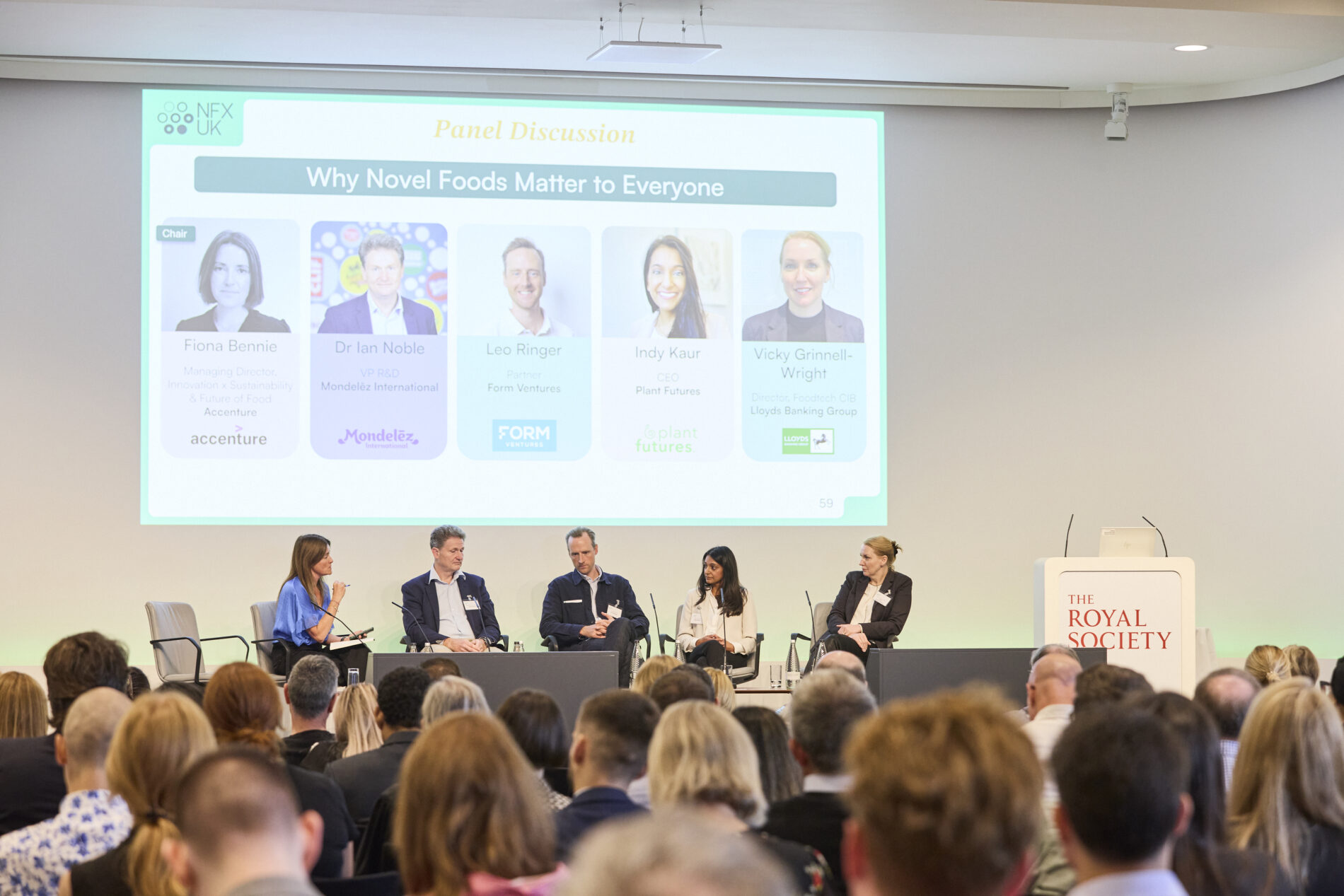
On 10th September 2025, NFX UK officially launched with a high-impact conference hosted at The Royal Society in London. The event brought together nearly 200 stakeholders across the UK’s Novel Foods ecosystem including industry leaders, researchers, start-ups, policymakers, regulators and investors, all focused on shaping the future of Novel Foods in the UK. Speakers also included the following government representatives: Mike Reader MP (Chair of the All Party Parliamentary Group Food and Drink), Lord Willetts (Chair of Regulatory Innovation Office, RIO).
The food system is central to the UK economy, population health, national security and international standing. With Novel Foods poised to address sustainability challenges, contribute to supply chain resilience, meet shifting consumer demands and support economic growth, the day underscored a clear message: the UK has both the ambition and the opportunity to lead globally – but only if the right systems, infrastructure and partnerships are in place. From discussions and keynotes to expert panels, four key themes stood out:
1. Building smarter, faster, more agile regulation
Contrary to popular perception, regulation is not a barrier – it can be a growth enabler if designed to be fit-for-purpose, responsive and well-resourced. Speakers highlighted:
- How streamlining regulatory processed for emerging technologies, including shifting from sequential to simultaneous assessments to reduce time to market, has a key role to play in accelerating innovation
- Ambitions to halve the regulatory timeline for products like cell-cultivated foods through focused regulatory initiatives such as Food Standards Agency’s (FSA) Cell Cultivated Products (CPP) Sandbox
- The importance of benchmarking against international regulations
2. The importance of funding and collaboration
A clear consensus emerged – increased funding is essential, not only for the industry but also for regulators to keep pace with the demands of a rapidly growing sector.
Adequate resourcing helps to send a clear signal that the UK is committed to being a global leader in Novel Foods Innovation. Key takeaways included:
- Collaborative models, such as the newly announced Innovation Research Programme (IRP) focused on Precision Fermentation demonstrate how industry and regulators can co-create to enable regulatory frameworks that are fit-for-purpose for emerging technologies
- Greater engagement from multinationals is vital – by supporting start-ups and providing early feedback on ingredients and products, established organisations can help de-risk innovation and help iterations
- Critically, the sector must engage more deeply with the public, seen as ‘citizens’, building trust and understanding through transparency, two-way communication and accessible education, without an overwhelming focus on technical aspects
3. Scaling innovation: From bench to market
Bringing Novel Foods from research labs to supermarket shelves remains one of the biggest challenges:
- With limited access to affordable food-grade facilities in the UK, start-ups face high testing and scaling costs – this has led many to pursue low-volume, high-value applications as a way to bridge the gap until full-scale production becomes viable
- There’s a need to connect the innovation centres and ecosystem across the UK to support targeted, efficient collaboration
- Investors need confidence earlier in the journey, which means companies must factor in regulatory roadmaps, validated testing methods and market authorisation strategies from the outset
4. Navigating the Novel Foods dossier submission maze
The regulatory pathway for novel foods can be complex but with the right strategy and support it can be navigated effectively. Top insights shared at the conference included:
- Early regulatory strategy planning is key to success. Start with mapping out a market authorisation and regulatory roadmap – this will help define your R&D strategy and manage expectations with investors
- Ringfence and allocate resources for testing and consultancy and consider engaging with experts from the outset – this can help navigate complexities such as identifying the right methods and working with small sample quantities. By joining the NFX UK community, members gain access to our Members and Experts Directory, a resource designed to support connections across the ecosystem, enabling innovators to explore and reach out to regulatory experts, consultants and testing partners as needed.
- Ensure you use labs that offer validated and accredited methods for testing to avoid setbacks in the dossier review process
Looking ahead
Beyond regulation and investment, the future of Novel Foods will depend on developing talent and building a multidisciplinary workforce that spans science & technology, business and regulation.
The NFX UK Launch Conference marked a turning point in the UK’s Novel Foods journey. However, this is only the start. We will continue to:
- Be a central hub for learning resources to empower you on your Novel Foods regulatory journey
- Grow the network, listening closely to the needs of our key stakeholders and build impactful partnerships across our ecosystem
- Foster open dialogue with both industry and regulators to support pragmatic, innovation-enabling regulation
If you’re working in or around the Novel Foods space, we invite you to join the network and be part of shaping a resilient, forward-looking UK food system.
Stay in the know
Sign-up to join our NFX Community and follow the NFX UK LinkedIn page to see the latest updates. Want the latest developments and insights delivered straight to your inbox? Subscribe here to receive our newsletter.